
Limited Edition Hardcover



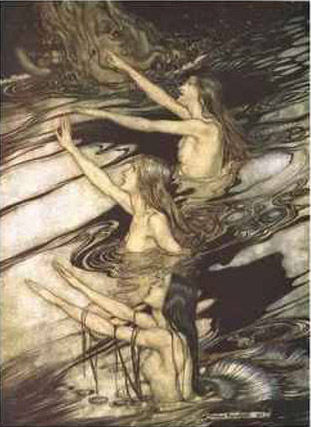 The Sirens (Seirênes)
are creatures of classical mythology best known for their deadly habit
of luring sailors to their deaths along rocky seashores with their
intoxicating song.
The Sirens (Seirênes)
are creatures of classical mythology best known for their deadly habit
of luring sailors to their deaths along rocky seashores with their
intoxicating song.
The early Greek stories described the Sirens as women with the bodies and feet of birds but the heads of women. They sang in beautiful voices and often were depicted with harps. While different stories describe them as anywhere from 2-5 in number, the most common stories of the Sirens described them as three sisters -- Pisinoe, Aglaope and Thelxiepi, daughters of the river god Achelous. Each had a musical talent, but were punished and transformed into half-bird creatures by Demeter when they failed to rescue her daughter Persephone.
Ovid describes the Sirens' plight in book 5 of the Metamorphoses:
But, o ye nymphs that from the flood descend,
What fault of yours the Gods cou'd so offend,
With wings and claws your beauteous forms to spoil,
Yet save your maiden face, and winning smile?
Were you not with her in Pergusa's bow'rs,
When Proserpine went forth to gather flow'rs?
Since Pluto in his carr the Goddess caught,
Have you not for her in each climate sought?
And when on land you long had search'd in vain,
 You wish'd for wings to cross the pathless main;
That Earth and Sea might witness to your care:
The Gods were easy, and return'd your pray'r;
With golden wing o'er foamy waves you fled,
And to the sun your plumy glories spread.
But, lest the soft enchantment of your songs,
And the sweet musick of your flat'ring tongues
Shou'd quite be lost (as courteous fates ordain),
Your voice and virgin beauty still remain.
(Translation by Sir Samuel Garth, John Dryden, et al)
Perhaps the most memorable depiction of the Sirens came from Homer's The Odyssey, when Jason orders his men to fill their ears with wax so that they could sail through the Siren's lair without being enchanted and lured to their death by their song. Jason is given warning on how to evade the Sirens by Circe. In The Odyssey Book XII (translation by Samuel Butler) she warns:
First you will come to the Sirens who enchant all who come near them. If any one unwarily draws in too close and hears the singing of the Sirens, his wife and children will never welcome him home again, for they sit in a green field and warble him to death with the sweetness of their song. There is a great heap of dead men's bones lying all around, with the flesh still rotting off them. Therefore pass these Sirens by, and stop your men's ears with wax that none of them may hear; but if you like you can listen yourself, for you may get the men to bind you as you stand upright on a cross-piece half way up the mast, and they must lash the rope's ends to the mast itself, that you may have the pleasure of listening. If you beg and pray the men to unloose you, then they must bind you faster.
Over the centuries, the physical descriptions in literature of the classic Siren changed, with some stories depicting them as having feminine bodies as beautiful and alluring as their voices. Others simply described them as "winged maidens." But all of the tales agree -- if a man should hear the beautiful voice of a nude woman singing from atop the rocks near the seas, he should not listen... or he will surely lose his life.